
Thank you for your vital commitment as a leader in sports!
Sports mean a great deal to us. Listen and let us be involved from the start. Participation strengthens both elite and grassroots levels—it helps us stay active in sports longer for health, development, and the future.
What does participation actually mean?
For us children and youth, participation means being able to say what we think, being listened to, and being able to influence things. It is not about deciding everything, but about being involved in making decisions on issues that affect us—together with others.
The right to say yes—and no
We have the right to say no, but we need the chance to be asked again and again. All children and youth need different ways to express themselves—in groups, individually, through play, or in writing.
When sport works
Sports provide community, joy, and security, and help us feel good and develop. But it doesn’t happen by itself—our lives are here and now, and as a leader, it is your responsibility to ensure our rights are met now. Your being present and listening makes a big difference. Sometimes you need to step back, sometimes step forward and help us.
See us and protect us
If something doesn’t feel right—see us and take action. Talk to your club or use the Swedish Sports Confederation’s whistleblower service>> for serious incidents. If something feels difficult—big or small—seek support from BRIS support line for sports leaders>>.
Make training more participatory
If you, as a coach, listen to us and start from how we experience our sport, the chances increase that we will continue for longer. We—children, youth, and adults—have tested simple ways to make training sessions more participatory, and engagement increased. Meet Ellinor in the video to learn more! >>.
You can do the same. Check out these ideas and try them at the next training session!
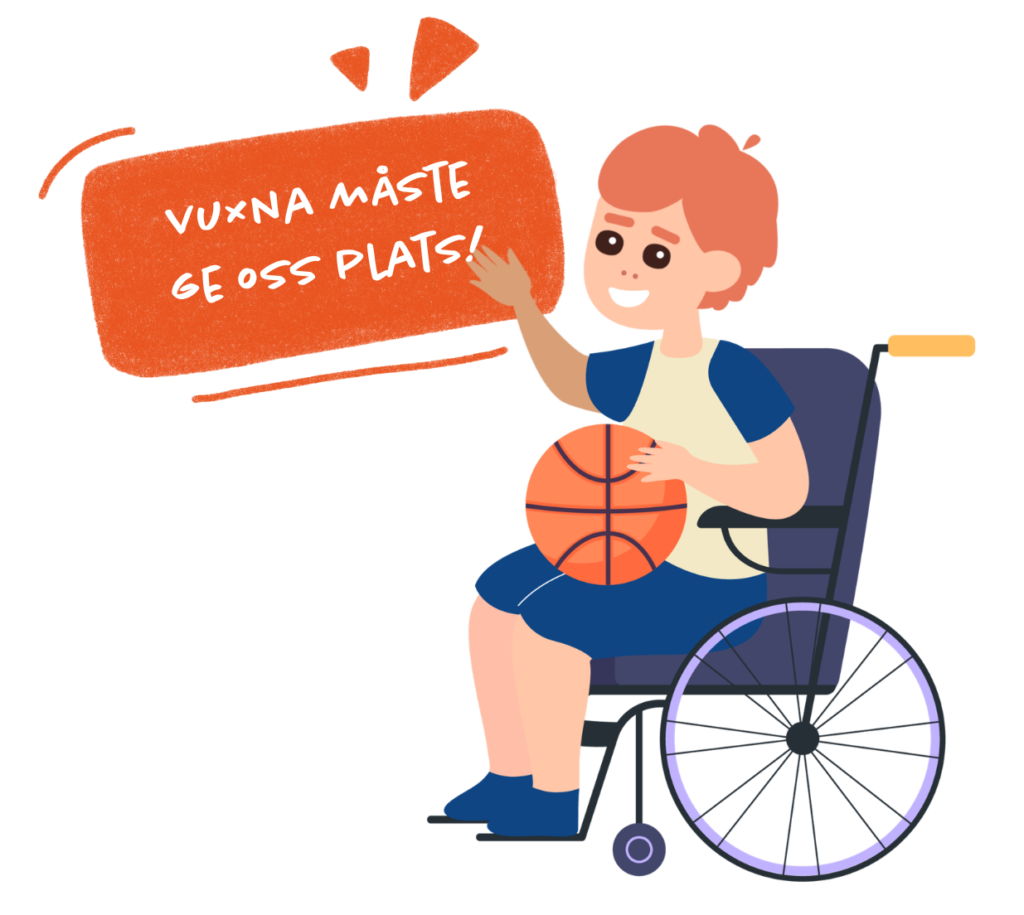
Why is it important to increase children’s and young people’s participation?
A democratic right!
The Convention on the Rights of the Child is Swedish law, and the Swedish Sports Confederation therefore considers the participation of children and youth a clearly prioritized and central issue within sports.
Improved athletic performance
Participation strengthens the ability to understand and take responsibility for one's own learning. When you are involved in influencing things, self-awareness, motivation, and the ability to become your own best coach develop.
Creates a desire to continue with sports longer
When sports are adapted to the practitioner's needs, the motivation to continue playing and to get involved as a leader, referee, or in the club's activities increases.
Counteracts a culture of silence
Increased participation leads to a reduced risk of a culture of silence. When the voices of children and youth are taken seriously, it becomes easier to speak up and seek support. This can be vital for preventing and stopping, for example, abuse.
Increases engagement
Participation creates engagement and makes more people want to contribute. The more people who share the volunteer responsibility within club sports, the more sustainable our clubs become.
Social sustainability
Social sustainability provides economic benefits—clubs that work with participation and safety become more attractive to sponsors and find it easier to obtain support and grants.
Give children and young people a voice—and strengthen the whole club
Watch this short educational film to gain more knowledge about children and young people’s participation in sports! Children and young people’s participation is a priority area in sports.
Once you have watched the film, there are discussion questions available to download to start a dialogue with your coaching colleagues about this.
Set aside 15 minutes at the next leaders’ meeting to get started in your training group!
Mapping and Working Methods
To create conditions for children and youth participation in sports, there are many effective approaches. Under “Method Bank – Approaches,” you will find materials and knowledge to inspire you in strengthening children and youth participation at different levels within the organization. Here you can read the survey that forms the basis for the materials developed on this website.
Meeting Places
For us to want and dare to make our voices heard, we need meeting places that are safe, fun, and adapted for us. Therefore, we have been involved in creating new forums where we participate in decisions that affect us.
We also want the meetings that already exist to become easier to understand and more playful. Be inspired by the importance of play>> for participation and don’t miss the video where our leader Wilma explains why it is important to ask us questions.

The importance of pizza for participation!
Meet us where we are
Participation doesn’t have to happen in a meeting room. Conversations are often better in environments where we feel safe and comfortable. Take advantage of opportunities that already exist – a pizza night, coffee after practice, a different kind of training session, a kick-off, or just a ten-minute chat before practice.
The format isn’t what’s important; what matters is that there is time, safety, and adults who truly listen. Without conversation – there is no democracy.
Talk about what is important to us children and young people ourselves. For example:
- practices, drills, tactics, and team selections
- how the group functions and what a good leader should be like
- nervousness, periods, performance anxiety, or mental health
- what works well and what works less well in the club
Be curious and attentive – and leave room for the questions we want to talk about. That is when you will gain insight into our experiences, needs, and ideas about our sports participation.
The Democracy Path
Here you can get an overview of how to work structured with youth participation in sports based on different ages.
See this as inspiration, not a definitive answer. Use what suits your engagement and the sports club you represent!


